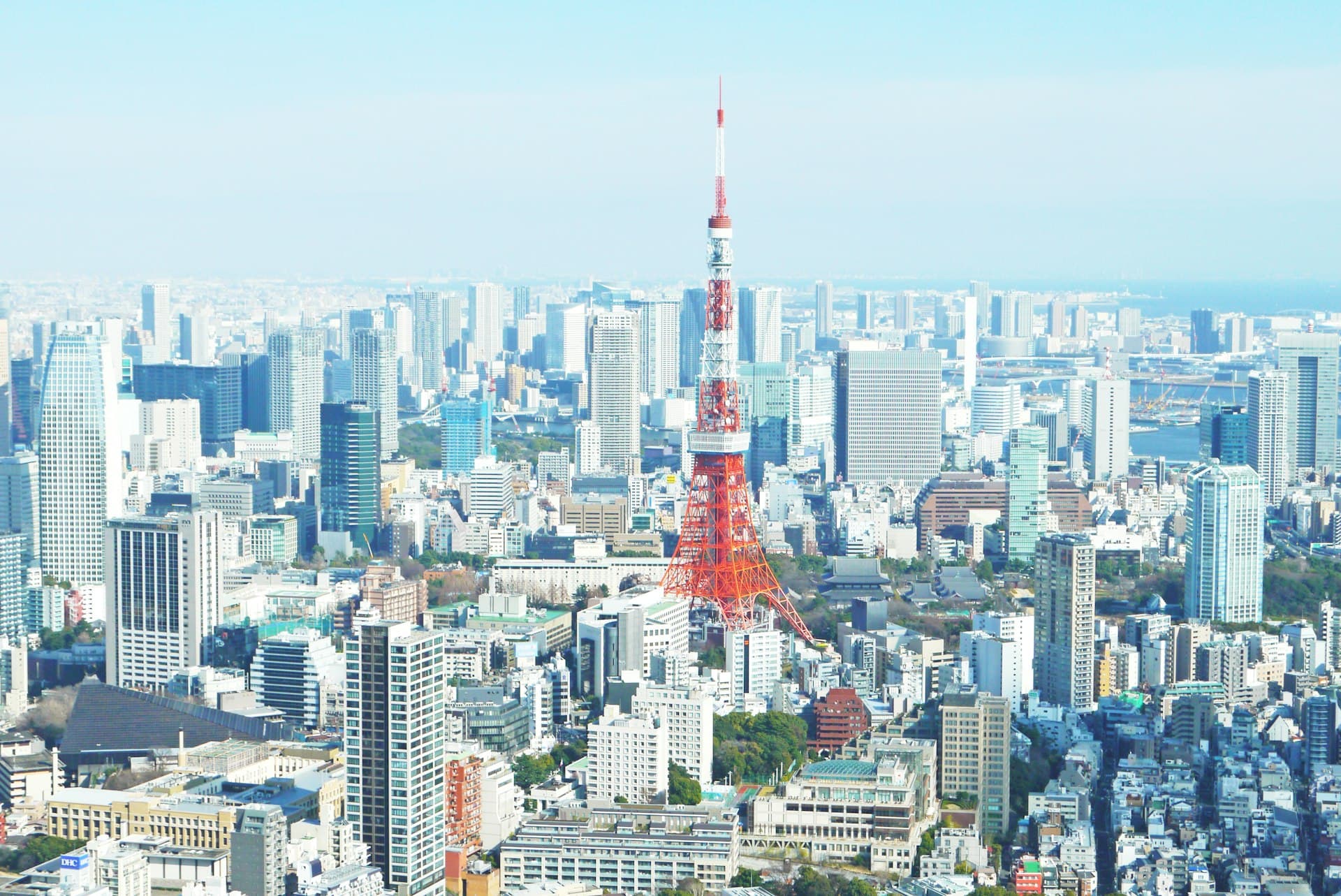
The shape of central Tokyo, in plain terms
Central Tokyo is built around the Imperial Palace (皇居), which sits in the middle of Chiyoda ward and acts as the geographic and symbolic centre of the city. The Yamanote line traces a rough loop around this core, and the nine wards in scope all touch or sit near that loop.
Three rough zones emerge when you stand back from the map. The eastern arc (Chiyoda, Chuo, plus a sliver of Minato) is the historical commercial core, with the financial district, traditional commerce, and the highest concentration of corporate addresses. The western arc (Shibuya, Shinjuku) is the cultural and creative engine, with the largest train hubs, fashion districts, and youth-driven dining. The southwestern bend (Meguro, Setagaya, with parts of Minato) is the quieter residential country, with leafier streets, broader unit footprints, and a stronger family presence. Shinagawa sits a little apart on the south side and carries two faces at once: its northern half (Shinagawa station, Osaki, Gotanda) is a corporate corridor with major international employers and a 15-minute Keikyu connection to Haneda Airport, while its southern half is quieter residential.
Bunkyo sits a little apart, north of the Imperial Palace, and serves a specific lifestyle: academic, residential, low-key. It's worth holding in your peripheral vision rather than ruling out early.
The nine wards at a glance
A reductive but useful overview before we narrow. Use this as a first-pass sort, not a final answer.
| Ward | Best for | Notable areas | Rent character (¥200–400k band) |
|---|---|---|---|
| Minato (港区) | International professionals, executives, hospitality lifestyle | Roppongi, Azabu, Shirokane, Akasaka | High-end ceiling, premium pricing, strongest expat infrastructure |
| Shibuya (渋谷区) | Creative professionals, dining-led lifestyles, central-mobile work | Daikanyama, Ebisu, Harajuku, Yoyogi | Wide range, strong rental velocity, moderate to high |
| Shinjuku (新宿区) | Salaried workers needing transit access, urban dwellers | Kagurazaka, Yotsuya, Ichigaya, Shinjuku Gyoen | Mid to high, strong value at the lower end |
| Chiyoda (千代田区) | Top-tier addresses, finance, palace-adjacent living | Bancho, Kojimachi, Marunouchi | High floor, premium pricing, low inventory |
| Chuo (中央区) | Heritage central living, tower lifestyle on the bay | Ginza, Nihonbashi, Tsukishima, Kachidoki | Moderate to high, strong tower-condo supply |
| Meguro (目黒区) | Quality daily life, design-forward couples and families | Nakameguro, Jiyugaoka, Komaba | Mid to high, premium for the most-walked stations |
| Setagaya (世田谷区) | Families, larger units, neighborhood-feel streets | Sangenjaya, Shimokitazawa, Futako-Tamagawa | Best price-to-space ratio in the nine, lower end of the band common |
| Bunkyo (文京区) | Academic families, parents prioritising school catchments | Hongo, Koishikawa, Hakusan | Mid range, low rental turnover (worth moving on quickly) |
| Shinagawa (品川区) | Internationally mobile executives, corporate professionals, frequent travellers | Gotanda, Osaki, Shinagawa station area, Tennozu | Mid to high, strong tower-mansion supply, Haneda access as a premium signal |
Three lifestyle clusters
Once you stand back from the table, the nine wards fall into three rough groupings. Most renters end up choosing within one cluster rather than across them, because the lifestyle differences between clusters tend to dominate the decision once a candidate is identified.
Cluster one: the international and professional core (Minato + Chiyoda + Chuo + Shinagawa). Highest concentration of foreign residents and international schools, premium hotel and dining infrastructure, strong concierge-style residential buildings, and the densest corporate address mix. Shinagawa joins this cluster as the fourth member, especially for renters whose work involves regular international travel: the 15-minute Keikyu connection to Haneda is a meaningful daily advantage that none of the other three carry. Trade-off: highest rents and least neighbourhood feel. Best when work demands an address that signals a certain register, or when bilingual building staff and curated lifestyle infrastructure matter daily.
Cluster two: the creative and central-mobile belt (Shibuya + Shinjuku). Strongest balance of rental supply, transit access, and walkable lifestyle. Younger demographic skew, dining culture as a daily fact, and pace that rewards being at the centre of things. Trade-off: more crowded, more night-life adjacency, less green space. Best for renters whose daily life depends on being able to walk or take a short train ride to most of their interests.
Cluster three: the residential southwest plus Bunkyo (Meguro + Setagaya + Bunkyo). Quieter streets, broader unit floor plans, stronger family-and-couple density, more parks. Slightly longer commutes to central business hubs in exchange for genuinely residential daily texture. Trade-off: less central, fewer late-night options. Best for renters who treat the home as a base of operations rather than a satellite of the entertainment district.
Four questions that narrow the list fastest
The list goes from eight to two or three quickly when you answer four questions in order. Most renters skip straight to rent and never get to the questions that would have made the rent-band conversation more meaningful.
- Where will you commute to most days? A 25-minute door-to-door commute on a single line is reasonable in central Tokyo. Two transfers and 50 minutes is not. Pull up the train map and check which two or three stations on your work route are within one transfer. The wards those stations sit in become your shortlist.
- Quiet streets or central energy? This is the single largest lifestyle filter. A renter who genuinely prefers quiet evenings will be miserable in central Shibuya, and a renter who feeds on the city's pace will be bored in Setagaya. Be honest about which one you are, not which one sounds nicer in the abstract.
- Family situation in the next 2–4 years? If schools are in the picture (especially international schools), Minato, Shibuya, and Setagaya carry the strongest established options, with Bunkyo strong for Japanese national schools. If a child is likely to arrive during the lease, broader floor plans in Setagaya or Meguro tilt the math.
- Foreign-friendly fit? Minato has the densest concentration of bilingual building staff, English-language services, and expat infrastructure, followed by Shibuya, then Shinagawa for renters tied to the corporate corridor. The other six wards are perfectly viable for foreign residents (the rest of the rental ecosystem has caught up significantly), but the daily ambient fit varies.
Notice that rent appears nowhere in these four. Rent is best treated as a constraint that filters within a ward shortlist, not a question that sorts the wards themselves. Almost every ward in the nine has units across the ¥200,000 to ¥400,000 a month band; the difference between wards is which units those budgets buy you, not whether the budget is valid.
Common decision archetypes
Five common patterns that show up most often in the renters Tokyo Rent Desk works with. Yours might map cleanly to one of these, or sit between two.
- Single international executive working in Roppongi or Marunouchi: Minato (Roppongi-Azabu corridor) is the natural first look, with Chiyoda (Bancho or Kojimachi) as the quieter alternative if the work address is on the palace side. Both clusters have the bilingual building infrastructure executive renters expect.
- Frequently travelling international executive in a corporate role: Shinagawa (Shinagawa station, Osaki, Gotanda) carries a unique advantage. The Keikyu line reaches Haneda in about 15 minutes, Shinagawa station is a major shinkansen hub for Tokai and Sanyo lines, the area concentrates Microsoft Japan, Sony, JR East and similar employers, and there is strong tower-mansion supply in the rental band. For renters who travel internationally several times a month, that mobility advantage is hard to match elsewhere.
- Couple in their thirties prioritising daily quality of life: Meguro (especially Nakameguro and Komaba) is the modal pick. Strong dining within walking distance, leafier streets than Shibuya proper, mid-range rents that buy meaningfully more space than the same budget in Minato.
- Family of four, schools matter, child density matters: Setagaya for the broader floor plans and family neighbourhood feel, Bunkyo if Japanese national schools are the priority, Minato or Shibuya if international schools are the priority and the budget supports the premium.
- Creative professional, transit-dependent, dining-led: Shibuya (Daikanyama or Ebisu) is the strongest fit. Shinjuku (Kagurazaka) is the underrated alternative with better food density per square metre and lower rent for comparable floor plans.
- Long-tenure JP family in finance or commerce: Chiyoda (Bancho or Kojimachi) and Chuo (Nihonbashi side) are the traditional picks. Both carry the right address signal and lean residential despite the corporate surroundings.